Academic Therapy

There are no books in my collection that I value quite as much as the one’s that would (or should) fall into the category of ‘Academic Therapy’. Designed with the intention of providing helpful practical guidance on topics such as academic writing, how to teach, or getting published, these texts inevitably end up more therapists couch than An Idiot’s Guide to…

My first of these type of books was Becker’s Writing for Social Scientists, a comfortingly small book that, rather than scoldingly reminding you of the grammar you should have learnt years ago, soothingly assured me that feeling completely at odds with your own brain, was actually fairly common amongst the academic population. I haven’t read Becker for a while so for the moment all I will say is this: If you get the feeling that, despite wanting to write, despite knowing what to write, and despite the deadline that means you have to write, that your brain is conspiring against you, then you need to read Becker.

The most recent addition to the Academic Therapy collection is William Germano’s From Dissertation to Book. The title says it all; how to turn your recently minted PhD thesis, into a marketable, pleasantly readable (lets admit now that they usually aren’t), book. Coming from the position of both a social scientist, and as an editor Germano understands…. he just understands. Germano understands that in all likelihood you would like your thesis to be a book, but would rather never look at the thing again. He understands that you are plagued with doubt about whether you’ve actually done anything worthwhile for the past however many years that thing took you. He understands that your literature review exists only because the people in charge of the shiny certificates said you had to. However most importantly, he also understands what an editor is thinking when you naively hand them your book proposal and say “I wrote a book me!”

If you’ve just finished your PhD, and you’re thinking that maybe, just maybe, that slab of paper you just created might have a book in it somewhere, Germano will help you really decide if you do, and then tell you what to do. The practical advice is brilliant, from prepping the manuscript, through revising, restructuring, it’s all there. However where it shines is the therapy. The book never makes you feel like you should be the expert, nor that something is obvious. You’ve just finished your PhD for God’s sake, you’re lucky you survived in the first place. You don’t know anything about publishing, you were busy contemplating the minutia of your topic and trying to remember to eat now and again. You might be an expert in your field, but equally likely you know bugger all about how the real world works.

Not to worry, Germano’s got your back. With a soothing sympathetic tone this book will guide you not only through the practical hurdles, but also the one’s your brain will throw up for you too.

Progress Report: We Have a Spike in the System

Don't look in the closet

Just updated the videos on how peer-to-peer networks work to Youtube videos. Now they are available in glorious HD, with surround sound, 4D vision and an immersive simulator technology that makes you feel like you really are there…. in a diagram of a network architecture. Well the HD is cool I suppose.

Also having not checked my stats for the site in a while I was pleasantly surprised to see I reached a new daily peak of visits this week. I have no idea why there was such a spike as apparently all visitors reached the site entirely on their own (without an outside link or google search). Ego me wants to presume my website was cited in some high class lecture and then all the students simultaneously loaded it up on their iPads as in this fantasy the University is horrendously well funded.

However realist me also knows that not all visits to a website are human, and it may just have been a case of the spiders; a phrase which gives me the jibblies.

I have my Viva in precisely seven days, which is rather terrifying. A viva is essentially a time when you, after slaving for three years over a tome of 100,000 words, are questioned on it relentlessly by two very clever people. It’s the academic equivalent of the realising-you’re-naked-in-the-classroom nightmare; they may as well be picking holes in your soul.

Finally in other news I’m currently knocking out book proposals to a variety of publishers to see if I can’t get my history of digital distribution published. Responses so far have been positive so you never know I might be shamelessly hawking my book on here in a years time, we can only hope.

Historical Research Online – Prezi

I had a few requests for access to the presentation I used to deliver my paper at the OII Symposium last week; so here it is in its wizzy glory.

You can use the arrow keys to move back and forth through the set path (the structured way) but also drag around to make your own way through it. Also if you go to ‘More’ you can go full-screen for better viewing.

Enjoy!

Oii: A Decade in Internet Time

I’m in Oxford at the moment at the Oii Symposium ‘A Decade in Internet Time’. It’s been a lot of fun, I got to present my research have some great feedback from interesting people. The paper I presented is available on the SSRN and you can grab a copy if you like. The conference still has a few days left so I’ll try and cobble something insightful (passable) together when I get home.

Links

My Paper: Internet Archives and Documentary Analysis: Writing a Messy Sociological History

New Media: 1740-1915


New Media: 1740-1915, (2003) Edited by Lisa Gitelman and Geoffrey B. Pingree, MIT Press.

Putting media and mediums into historical context is important. This book does a pretty solid job of it.

Description from MIT Press

Reminding us that all media were once new, this book challenges the notion that to study new media is to study exclusively today’s new media. Examining a variety of media in their historic contexts, it explores those moments of transition when new media were not yet fully defined and their significance was still in flux.

For other book suggestions take a look at the books category or visit my bookshelf.

The Day the Facebook Died

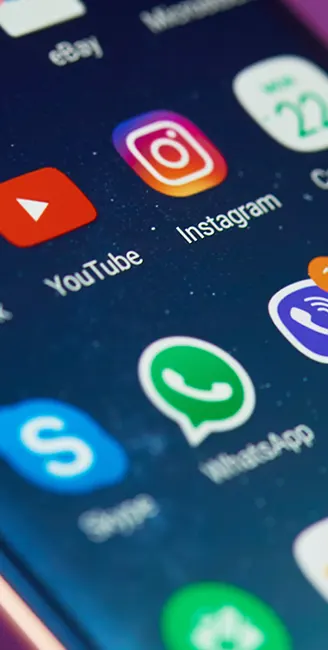
Today I deleted my Facebook account. I have to wait 14 days to REALLY be deleted and even then I don’t entirely trust the Zuckerberg empire to remove my data completely. I’m sure my ‘favourite books’ and ‘quotes’ will be knocking around their databanks for a few years yet.

“Why did you delete it, do you hate people?”

People are great, but online they act odd. Facebook allowed me to see into the lives of two sets of people; people I see regularly, and people who should have been lost to time many years ago. The people I see regularly, I like them, but sometimes too much information can be a bad thing. I have insights into the lives of everyday acquaintances  that I wouldn’t have without FB and feel voyeuristic. It seems to me that, going against expectation, people share more online than they would in person. The mediation of the computer provides a false bubble of safety and comfort, meaning the general anxiety of bodily cues that would normally kick in when you were about to announce to a room of people your latest embarrassing factoid, don’t. I would rather engage with the persona that an individual willingly projects, rather than the one they have been lured into revealing.

Then there are the people that I never see in person. The vague acquaintances that, having met them once, forever-on populate my newsfeed. The people from school that, fifteen years ago never said a word to me, and now out of perverse curiosity or an odd networking OCD are now classified as ‘Friends’. They are ‘Facebook friends’ not actual friends. In a bygone age I would have completely left them behind, know nothing about them and have lost nothing in my ignorance. I’m sure they’re all nice people, nothing wrong with them at all, but I’m a firm believer that as time passes, you leave the majority of acquaintances behind so that you can retain the connections that really matter: FB was messing with that mojo.

Does it Hurt? How Do you Feel?

Just before I pressed the button to delete my account, I must admit to feeling that this occasion was incredibly momentous and much hung in the balance. Then I reminded myself that it’s a social networking site, not a newborn child and promptly pushed the button. Afterwards I had a mind rush of all the people that I would still like to keep in touch with, but don’t see them regularly, what will become of them? Have I consigned myself to a life of isolation, an offline existence without laughter, joy and companionship. Will I be left behind in my career now I am severed from those people that I met at conferences, swiftly friended and then never spoke to again? Probably not.

So you hate technology and the future now?

This is not a ‘technology is ruining my life’ statement of action, it’s a ‘Facebook, I don’t like you’ statement of action. Im still on other networks (Twitter, Linkedin, Google+) and that may seem hypocritical if you thought my actions were of an anti-social network crusader. I’m not anti-social-network, but I think they should be used for certain purposes. Twitter is great for tech-news and professional contacts. It’s a communications platform not a social aid. Linkedin is good for careers, it’s an employment tool, not a social aid. Google Plus is… well I don’t think anyone knows what G+ is yet but if I do find a use for it, I’ll make sure it’s not as a social aid. Facebook was beyond my purposes, it had come to supplant my relationships rather than enhance them and had made me socially lazy.

So goodbye Facebook, you shall not be missed.

**If you would like to join me and help work out what Google+ is for you can click this link for access to the restricted Beta.